

Barcode Wristbands in Behavioral Health: Reducing Errors at Point of Care
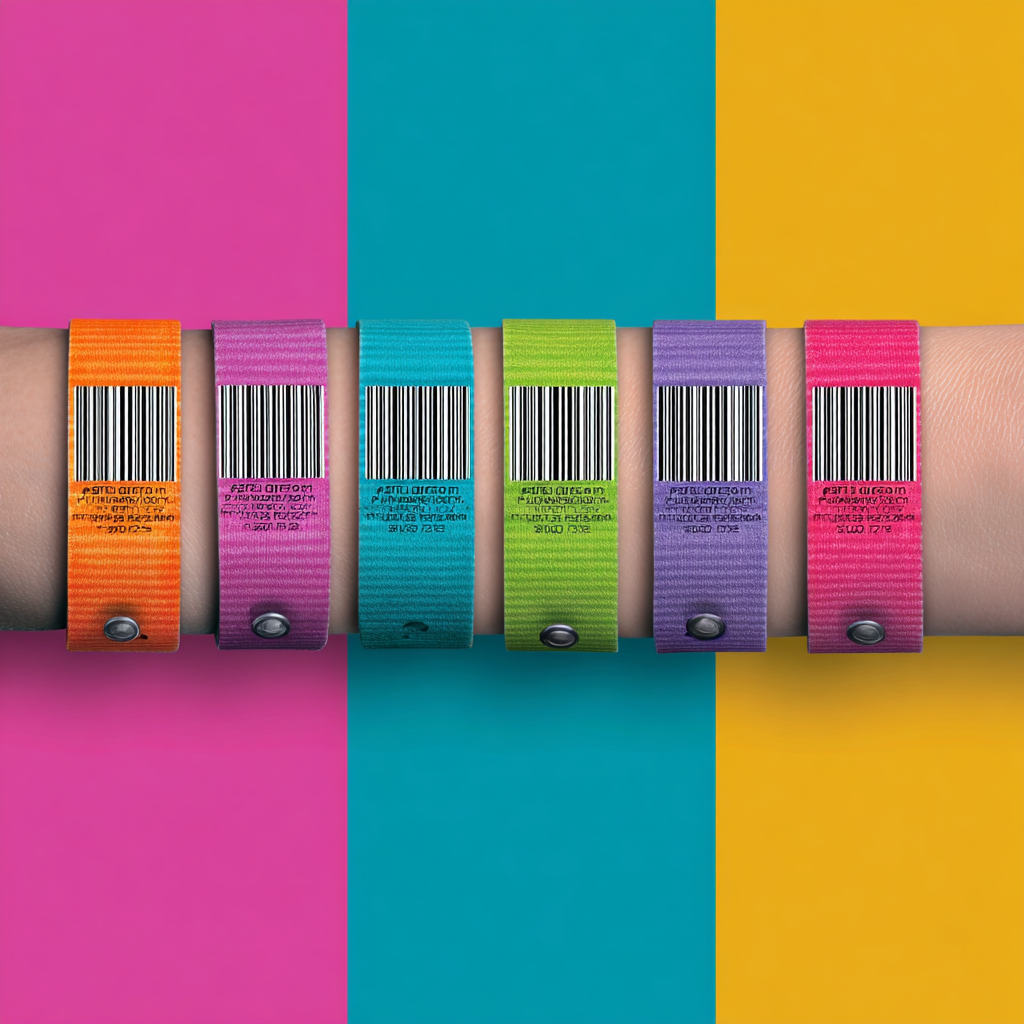
In behavioral health, you reduce wrong-patient risk at the point of care by using barcode wristbands that force an auditable match before high-risk steps. You scan the patient’s wristband, your badge, and the medication label, and the EHR flags mismatches before anything reaches the patient. You also time-stamp transfers and med passes to support two-identifier policies and compliance. Choose durable, tamper-evident, scan-validated bands and train with quick-scanner drills to further tighten performance.
Barcode Wristbands in Behavioral Health: The Basics
Although behavioral health settings often prioritize therapeutic rapport over technology, barcode wristbands provide a fast, auditable way to verify identity at every high-risk step in the workflow. You assign a unique barcode at intake, then staff scan it to pull the correct chart, orders, and precautions in seconds. You standardize wristband color coding to support quick visual cues while keeping the barcode as the definitive identifier. You reinforce compliance by time-stamping scans for QA, incident review, and accreditation readiness. You also boost patient engagement by explaining how scanning protects privacy, reduces mix-ups, and supports safer, smoother care.
Where Barcode Wristbands Prevent ID Errors
You reduce wrong-patient risk by scanning a barcode wristband at medication administration, matching the wristband ID to the eMAR order before you administer a dose. You also tighten compliance during patient transfers by scanning at send and receive, documenting that the right person moved to the right unit with a time-stamped verification. In both workflows, you create an auditable trail that supports two-identifier policies and flags mismatches before they reach the patient.
Medication Administration Verification
Before any dose reaches a patient, barcode wristbands let staff verify identity at the bedside by scanning the wristband and matching it to the eMAR order, which reduces wrong-patient and wrong-medication errors in fast-moving behavioral health units. You standardize the five-rights workflow: scan wristband, scan medication, confirm dose, route, time, and document in real time. You capture exception data—overrides, mismatches, and late doses—so you can trend risk and tighten policies. This closed-loop step strengthens medication safety, supports patient compliance, and aligns with audit-ready documentation requirements while minimizing interruptions and manual transcription.
Patient Transfer Identity Checks
The same closed-loop scanning that protects medication administration also reduces identity errors during patient transfers, when handoffs and unit changes increase risk. You scan the wristband, match the EHR, and confirm destination, bed, and level-of-observation before transport starts. That tightens patient identification protocols and standardizes your workflow across units.
- Scan at departure and arrival to create an auditable chain of custody
- Auto-populate transfer forms to improve transfer documentation accuracy
- Trigger alerts for mismatched identifiers, precautions, or legal status
You’ll reduce rework, near-misses, and compliance gaps while keeping throughput high and staff aligned.
What You Need to Implement Barcode Wristbands
To implement barcode wristbands in behavioral health, you’ll need materials that withstand moisture, cleaning agents, and daily wear while keeping barcodes legible for reliable scans. You’ll also need scanners that perform in low-light, high-traffic workflows and support your medication administration, lab collection, and patient transfer checkpoints. Finally, you’ll need software and integration that map each scan to the correct patient record in your EHR, enforce access controls, and produce audit trails that support HIPAA and internal compliance.
Wristband Materials And Durability
Because barcode wristbands sit at the intersection of patient safety, throughput, and audit readiness, you need materials that scan reliably after days of wear, hand hygiene, and exposure to the environment. Start by matching wristband types to patient acuity and unit conditions, then validate material benefits with stress tests (soap, sanitizer, showering, friction, and UV). Choose constructions that resist smearing, stretching, and delamination to protect identifiers and meet documentation expectations. Prioritize:
- Soft, tamper-evident closures to reduce removals and reprints
- Chemical- and moisture-resistant stocks for legible barcode
- Latex-free, hypoallergenic options to reduce skin events
- Track reprint rates as a durability KPI.
Scanners, Software, And Integration
Durable wristbands only improve safety if your scanners and software can read them consistently at the point of care and write the result back to the record. Choose healthcare-grade 2D imagers that handle low light, curved surfaces, and frequent disinfection; then test scanner efficiency with real workflows, not lab prints.
Next, validate software compatibility across your EHR, MAR, lab, and pharmacy systems so each scan enforces the right patient, order, and time window. Build interfaces that log user, device, timestamp, and exceptions for audit readiness. Pilot on one unit, track mis-scan rates, and iterate quickly.
How Wristband Scanning Works at Point of Care
Three quick scans typically drive the point-of-care workflow: the patient’s barcode wristband, the clinician’s badge (if your policy requires user authentication), and the medication or order label. You scan to confirm you’re acting on the right record, in the right context, at the right time—then the system logs the encounter for audit readiness. Modern wristband technology reduces manual lookups and supports patient safety by tightening identity matching and timestamped documentation.
- Verify identity and location against the active encounter
- Confirm authenticated user and role-based access
- Capture time, task, and exception reasons for compliance
Barcode Wristbands for Safer Med Passes (BCMA)
When you run barcode medication administration (BCMA) off a patient’s wristband, you turn the med pass into a closed-loop workflow that verifies the right patient, right medication, right dose, right route, and right time before anything is given. You scan the wristband, scan the med, and let the system block mismatches, allergies, duplicate therapy, and timing conflicts. You standardize wristband color coding to support rapid visual cues without replacing the scan. You capture patient feedback at bedside to confirm preferred name, current symptoms, and refusal reasons, then document variances for audits and quality dashboards.
Barcode Wristbands for Labs and Specimen Custody
BCMA closes the loop at the point of administration, but you still need the same identity controls before a specimen ever leaves the unit. When you scan the wristband at collection, you bind the patient, order, and label in real time, reducing the risk of mislabeling and supporting CLIA/CAP-ready chain-of-custody documentation. Build lab integration so results post to the right chart without manual re-entry.
- Scan-to-label printing at bedside to eliminate handwriting variation
- Time-stamped, user-attributed specimen tracking from draw to receipt
- Exception alerts for mismatched orders, duplicates, or expired collection windows
Barcode Wristbands for Transport and Unit Transfers
Every transfer—ED to inpatient, unit to radiology, room change, or discharge—creates a new identity checkpoint, and barcode wristbands let you verify it in seconds. You scan at departure and arrival, creating a time-stamped chain of custody that supports compliance and reduces misroutes. In transport procedures, scanning ties the right patient to the right destination, order set, and escort requirements without relying on memory or paper. During unit transfers, the scan triggers unit communication—bed assignment, precautions, and observation level—so receiving staff act on current data. You also document exceptions fast.
Choosing Barcode Wristbands for BH Units
Because behavioral health units operate under higher elopement and self-harm risk, you should choose barcode wristbands that balance reliable scan performance with ligature-resistant, tamper-evident construction and durable print quality. Standardize on materials that scan on first pass to reduce medication administration interruptions and medication misidentification. Build a selection rubric that aligns wristband customization options with your EHR, printer fleet, and downtime labels, while documenting regulatory compliance considerations for patient ID and traceability.
- High-contrast, smudge-resistant barcodes validated on your scanners
- Breakaway closures and anti-transfer adhesives to deter swapping
- Lot/print auditing to support incident review and QA dashboards
Patient-Friendly Wristband Design That Stays On
You reduce the risk of misidentification and reprint volume when you choose wristbands with secure, gentle closures that resist tampering yet release safely under clinical protocols. You keep wear compliance high and downtime low by specifying comfortable, durable materials that withstand showers, cleaning agents, and extended wear without fraying or causing skin irritation. You support fast, accurate bedside verification when you require clear, scan-friendly printing that maintains barcode contrast and readability across the full wear period.
Secure, Gentle Closure Options
In behavioral health, a wristband closure can make or break positive patient ID if it slips, irritates skin, or gets tampered with. You need a secure fastening that resists picking yet supports gentle removal during discharge or transfer. Choose closures that lock with an audible click and show visible tamper evidence, so audits are clean and rescans stay consistent at the point of care.
- Ease of closure so staff can apply it quickly during intake
- Tamper-evident break points to flag manipulation without rebanding delays
- Standardized closure steps to reduce variation and support policy compliance
Comfortable, Durable Materials
While closures handle security, the wristband’s material determines whether scans stay reliable across showers, agitation events, and extended holds without causing skin breakdown. You’ll reduce re-banding and missed medication checks by standardizing on soft, latex-free, hypoallergenic substrates that wick moisture and minimize friction. Prioritize tear-resistant, stretch-tolerant bands that resist cracking from disinfectants and repeated hand hygiene exposure—material durability directly supports uninterrupted identification workflows. Choose edges that won’t curl or cut, and sizes that accommodate edema without constriction. Document material specs in purchasing controls to meet infection-prevention, safety, and auditing expectations.
Clear, Scan-Friendly Printing
Soft, durable materials keep bands wearable, while print quality ensures identification workflows are trustworthy at the scanner. You reduce misreads by standardizing printing technology, verifying contrast, and protecting codes from smearing during hand hygiene and restraint use. Build compliance into every reprint by locking templates and audit trails, then test scan rates at admission and med pass. Prioritize design considerations that support fast, low-light reads and minimize PHI exposure.
- High-contrast 1D/2D codes with quiet zones
- Smudge-resistant inks, lamination, and correct heat settings
Human-readable text, rotation control, and failover IDs
Training, Troubleshooting, and Proving ROI
Because barcode wristbands touch admissions, med pass, labs, and discharge, you’ll only see measurable safety and compliance gains if you train to the workflow, troubleshoot to root cause, and track ROI with auditable metrics. Build role-based simulations at the scanner, not in a classroom, and use user-engagement strategies such as micro-drills, peer champions, and real-time prompts to improve training effectiveness. When scans fail, log device, label, lighting, and EHR states; fix the systemic driver, not the clinician. Prove ROI by trending scan compliance, medication mismatch alerts, redraw rates, and time-to-identify, then tie results to incident reductions and survey readiness.
Conclusion
You’re guiding a unit through fog, and the barcode wristband is your lighthouse—quiet, constant, measurable. When you scan at med pass, transport, and transfer, you replace memory with verification, cutting mis-ID risk at the point of care. You standardize workflows, document compliance, and create audit-ready data trails. Choose durable, patient-friendly bands, train for exceptions, and track scan rates, overrides, and near-misses—so safety isn’t hope; it’s evidence.