

Barcoded Inmate Wristbands: Linking Commissary, Healthcare, and Classification
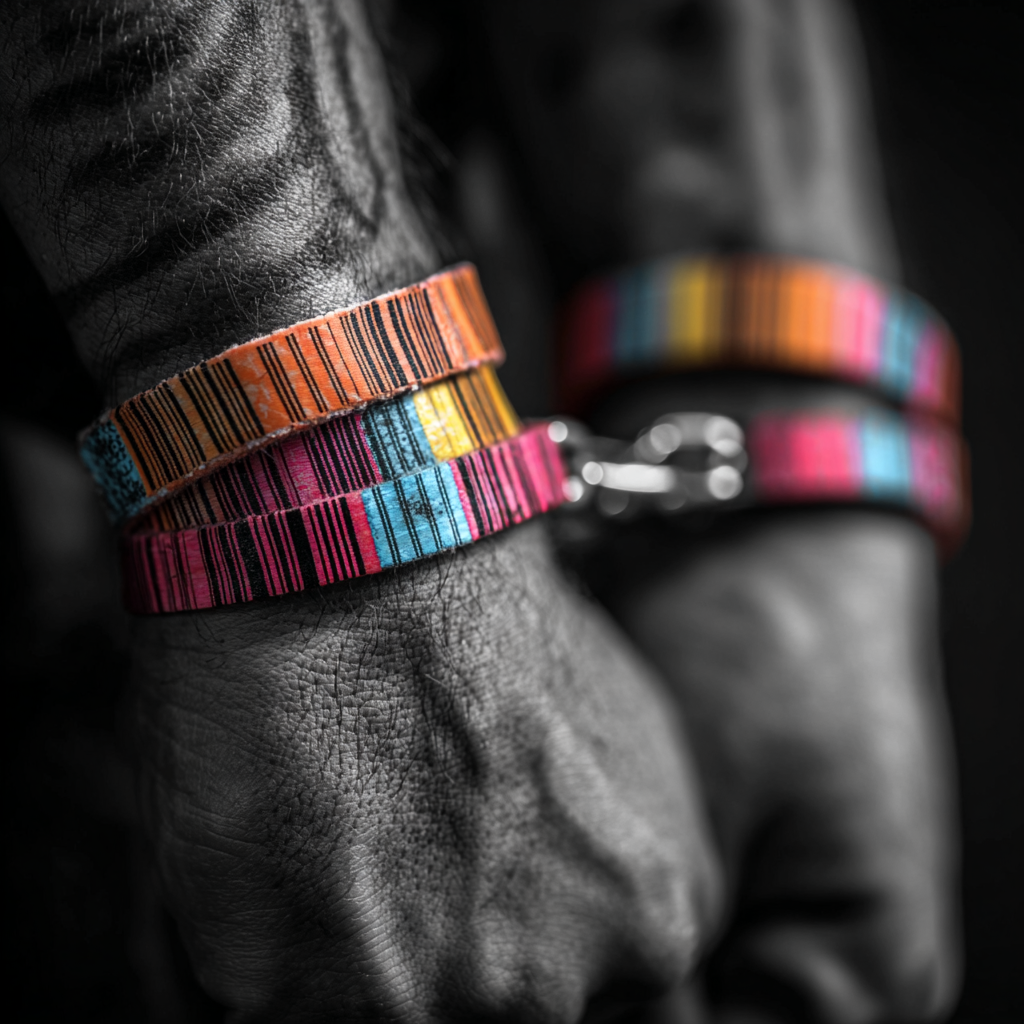
You issue a tamper-evident, barcoded wristband at booking after identity verification, and then tie fingerprints, photos, and demographics to a single unique record. Your jail management system syncs, scans in real time, logs exceptions, and supports chain-of-custody audits. At the commissary, you reduce mischarges by enforcing scan discipline and reconciling POS logs to inventory. In healthcare, you confirm MAR orders and timestamp administrations. For classification and transfers, you validate housing moves and counts. Next, you’ll see how to harden durability, privacy, and metrics.
How Barcoded Inmate Wristbands Work at Booking
Although each facility configures its intake system differently, booking staff typically issue a barcoded inmate wristband immediately after identity verification so they can link you to a single, unique record across the jail management system. During the booking process, you confirm demographics, capture fingerprints and photos, and validate warrants while staff applies the wristband using tamper-evident stock. You’re then instructed to keep it visible for inmate identification at every controlled handoff—staff audits the barcode legibility, band fit, and assignment accuracy against intake checklists, reducing the risk of misidentification. If data changes, policy drives rebanding and documented disposal to ensure traceability.
Jail Management System Integration for Wristband Scanning
When you integrate wristband scanning with your Jail Management System (JMS), you sync inmate identity, location, and status in real time, reducing mismatches and supporting audit-ready records. You route each scan event through a defined workflow—validate the barcode, confirm the JMS record, log user/time/location, and enforce role-based access to meet policy and chain-of-custody requirements. You also set exception handling for unreadable bands or data conflicts so staff can resolve issues immediately without breaking compliance.
Real-Time JMS Data Sync
Real-time JMS data sync turns every wristband scan into a controlled, auditable transaction that pulls current inmate identifiers, housing location, classification flags, and custody status directly from your Jail Management System. With real-time updates, you reduce reliance on stale rosters and prevent downstream mismatches across commissary, medication administration, and unit assignment. You enforce policy by validating eligibility and restrictions against authoritative records before any action posts. Data synchronization supports standards-based interfaces, role-based access, and immutable logs for PREA, HIPAA, CJIS, and internal QA, providing measurable latency, error-rate, and exception metrics for continuous improvement.
Wristband Scan Workflow
With real-time JMS data sync in place, you can standardize a wristband scan workflow that treats each scan as a verified step in a controlled process. You’ll pair wristband technology with JMS rules so inmate identification is validated against current status, location, and restrictions, then logged with time, device ID, and operator. Build the workflow as repeatable checkpoints:
- Intake scan at sally port: create/confirm identity, issue band, lock demographics.
- Point-of-service scan at med cart or commissary window: enforce eligibility, capture consent, prevent duplicates.
- Movement scan at unit door: verify classification, generate audit trail, trigger alerts.
Commissary Accuracy With Barcoded Inmate Wristbands
Although commissary teams aim for clean, auditable transactions, barcoded inmate wristbands don’t inherently improve commissary accuracy because purchases still depend on correct identity verification at the point of sale and on consistent barcode-scanning discipline. To raise accuracy, you standardize wristband technology use: scan-before-selection, scan-at-pick, and scan-at-issue, with exception codes for unreadable bands. You reconcile commissary inventory by matching scan logs to POS line items, lot numbers, and bin locations, then flag variance thresholds for supervisor review. You enforce compliance with role-based permissions, time-stamped edits, and daily cycle counts tied to scan compliance rates.
Medication and Care Verification via Inmate Wristbands
Because medication passes and clinical encounters hinge on positive ID, barcoded inmate wristbands can tighten medication and care verification when you hardwire scanning into the workflow: scan the band, confirm the MAR order, then document administration (or refusal) with a time stamp and staff ID. You reduce the risk of wrong-patient events, support audit trails, and strengthen medication adherence with exception reporting. You also enable care coordination by syncing essential signs, labs, and provider notes to a single identifier in real time.
Picture:
- Nurse scans at the cart, alert fires.
- Clinic room scan opens the chart instantly.
- Dashboard flags missed doses and follow-ups.
Classification, Housing, and Transfers Using Barcode Wristbands
You scan the barcoded wristband to apply real-time classification updates and automatically log who made the change, when, and under which policy rule. You use the same scan workflow to confirm housing assignments, reconcile unit counts against the roster, and flag exceptions for immediate resolution. When you move an inmate, you scan at every handoff to timestamp transfer events, enforce chain-of-custody, and produce an audit-ready trail.
Barcode-Driven Classification Updates
When you tie barcode wristbands to your jail management system, each scan can trigger an auditable classification update that keeps housing and transfer decisions aligned with the current status. You strengthen inmate identification and capture barcode benefits by enforcing scan-before-action steps at intake, court returns, and medical clearances. Each event writes time, user, device, and reason codes, supporting PREA, DOJ, and local policy reviews.
Picture the workflow:
- A deputy scans, then confirms alerts before changing the security level.
- A supervisor scans and then approves a transfer with rule-based prompts.
- An auditor scans logs, then verifies overrides, exceptions, and signatures.
Housing Assignments And Counts
Although housing boards change fast across shifts, barcode wristband scans keep assignments and headcounts synchronized by forcing a scan-to-verify step before bed moves, unit transfers, and count clearances. You scan at the door, bed, and roster, then your system timestamps the event and updates the master housing list in real time. That creates auditable proof you followed policy, reduces miscounts, and flags exceptions when a scan doesn’t match the authorized location. For housing logistics, you get faster roll calls, fewer paper reconciliations, and cleaner discrepancy reports. For inmate tracking, you establish a single source of truth across the enterprise.
Transfer Tracking And Chain-of-Custody
Before an inmate changes classification, housing, or custody status, barcode wristband scans enforce a step-by-step chain-of-custody that documents who moved them, from where, to where, and under which authorization. You reduce transfer security gaps by requiring scan-to-access workflows, time stamps, and role-based approvals. Each handoff is posted to custody management dashboards, providing auditors with an immutable trail and supervisors with real-time exceptions.
Picture the process:
- A sally port gate opens only after dual scans match the move order.
- A transport officer scans at pickup, vehicle entry, and arrival.
- Receiving staff scans to confirm bed assignment and status change.
Wristband Durability, Comfort, and Privacy Safeguards
Reliability hinges on wristbands that stay readable, feel acceptable on skin, and protect sensitive data from unnecessary exposure. You standardize wristband materials by testing abrasion, moisture, and disinfectant resistance, then set replacement thresholds tied to scan-failure rates. You capture user feedback from custody and clinical staff to reduce skin irritation, tamper attempts, and rescans that slow lines. You safeguard privacy by limiting printed identifiers, using barcode-only faces, and enforcing role-based access in connected systems. You document controls for audit readiness, align with HIPAA-like principles where applicable, and validate workflows through periodic QC scans and incident reviews.
Conclusion
When you issue barcoded wristbands at booking and scan them at each checkpoint, you don’t just track people—you protect identity, inventory, and care. You cut commissary errors, document the five rights of medication, and keep classification and housing decisions audit-ready. Like Ariadne’s thread through a complicated maze, each scan ties actions to time, user, and policy. Choose durable, comfortable bands, limit the data displayed, and maintain encryption, access logs, and chain-of-custody.