

BlueTrac® vs. Traditional Ankle Monitors
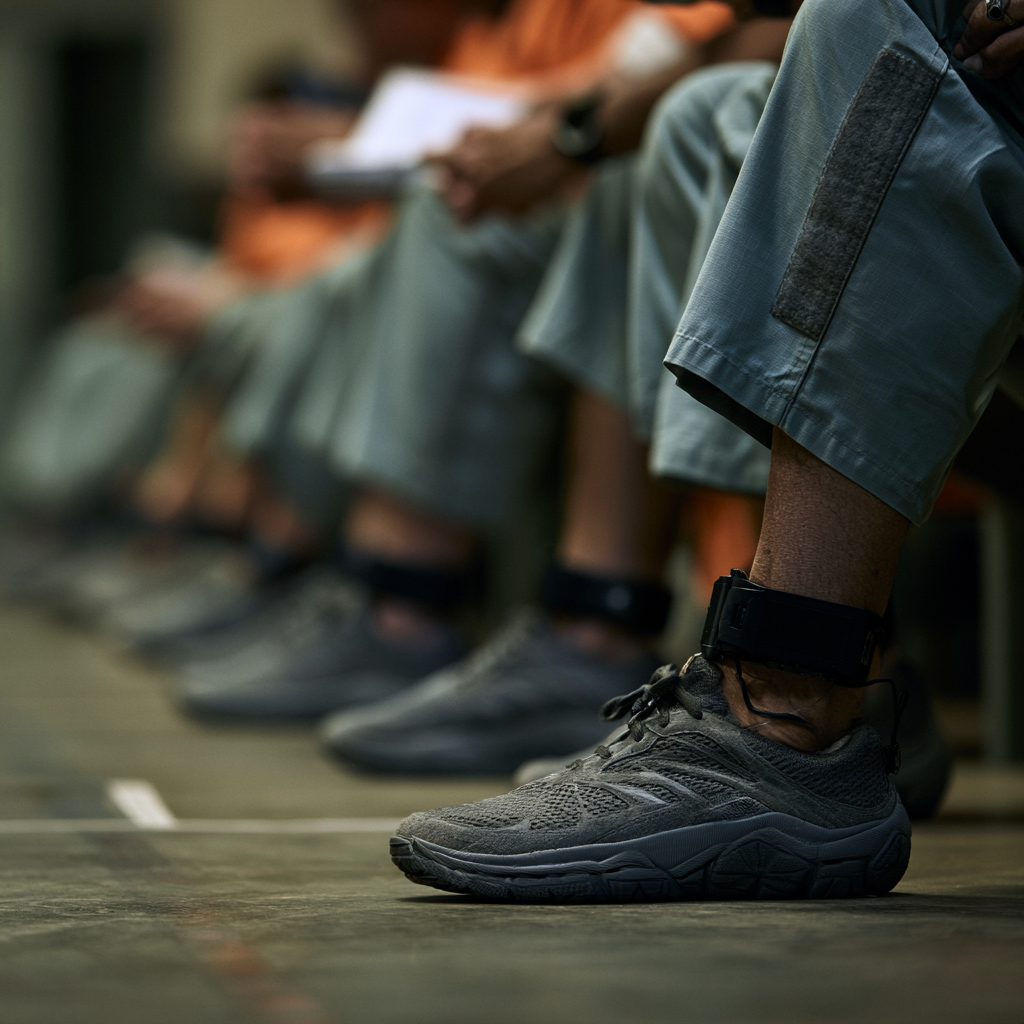
Why does BlueTrac® represent a policy and operational shift from traditional ankle monitors? You gain a system designed for tighter administrative control, lower maintenance burden, and more consistent compliance management. Unlike a conventional ankle monitor, BlueTrac® emphasizes automation, long battery life without recharging, and monitoring workflows that don’t rely on parolees’ and probationers’ repeated participation. That changes how you set supervision policy, allocate officer time, and measure operational risk.
Traditional ankle monitor programs often absorb resources through charging logistics, manual follow-up, and avoidable service interruptions. BlueTrac® supports a more disciplined model: simplified pricing, automated monitoring inputs, and configurable alerting that can reduce alarm fatigue while preserving critical notifications. For you, that means stronger standardization across populations, clearer escalation rules, and a monitoring framework better aligned with modern parole policy objectives and outcomes.
How BlueTrac® Monitoring Works
How does BlueTrac® monitoring actually function in practice? You deploy a tamper-evident wearable that pairs with a tethered phone, then let the system automate routine supervision. BlueTrac® validates compliance through tamper detection, biometric verification, PIN checkpoints, scheduled face-to-face calls, locational fence inclusion and exclusion against scheduled calendar events, cut band detection, band-missing detection, and phone-missing detection to reduce dependence on constant officer intervention. If the wearable separates from the phone, or if the phone is muted or shifted to Do Not Disturb, the platform triggers rapid, immediate audible alarms and monitoring alerts.
You also set a geofence policy framework around approved and prohibited zones. Thresholds govern keep-in, keep-out, and proximity events, so you can tune communications to match risk tolerance and reduce alarm fatigue. At both hardware and cloud levels, BlueTrac® flags interruptions, violations, and threat conditions, giving you tighter operational control, clearer escalation paths, and more defensible supervision outcomes.
Why BlueTrac® Needs No Daily Charging
A no-charge daily operating model matters because supervision breaks down when device uptime depends on parolee compliance. With BlueTrac®, you remove that failure point. Its one-year battery life supports continuous monitoring without routine charging, so you maintain operational control and reduce avoidable gaps.
- You eliminate excuses tied to dead devices.
- You reduce staff time spent managing charging compliance.
- You improve evidentiary continuity for supervision records.
- You lower daily friction for both officers and parolees.
From a policy standpoint, that matters. Systems that require daily charging shift accountability from the agency to the monitored individual. BlueTrac® doesn’t. Its automated model supports biometrics, PIN workflows, and face-to-face verification without adding a charging burden. You get a lower-intervention process, more predictable uptime, and stronger enforcement integrity throughout the supervision period.
How BlueTrac® Handles Geofences
In practice, BlueTrac® handles geofences through configurable inclusion and exclusion zones with adjustable thresholds, letting you align alerting with supervision policy rather than forcing a one-size-fits-all rule set. You can standardize settings across a municipality or tailor each geofence by population, officer, or case requirements, giving supervision teams precise administrative control.
With real-time monitoring, BlueTrac® evaluates boundary status, proximity conditions, and communication pathways at both device and cloud levels. You decide whether to enforce broad exclusion zones, tighter inclusion areas, or proximity-based warnings tied to operational priorities. That flexibility matters when adults, juveniles, and specialized caseloads require different movement rules. Training also emphasizes practical geofence design, so you can maintain coverage without creating overly narrow zones that undermine reliability or trigger unnecessary exceptions. Global Fence in BlueTrac allows for hundreds or thousands of geofences to be created within minutes (i.e., all schools in a zip code or town, etc for pedophiles; All bars and lounges in a zip code or town, etc for AA meeting attendees, etc.) The result is stronger policy execution with measurable consistency.
How BlueTrac® Reduces Alert Fatigue
Why do monitoring programs burn out on alerts? You lose control when every exception looks urgent. BlueTrac® reduces alert fatigue by letting you tune geofence alerts, interruption notices, and communication thresholds to policy, population, and officer workflow. You decide whether to send no threshold alerts, only critical violations, or a broader warning set.
- Set thresholds for inclusion and exclusion zones, and proximity events.
- Standardize rules across a municipality or customize by caseload.
- Disable nonessential hardware interruption alerts when noise overwhelms staff.
- Train teams to design practical geofences that limit false alarms.
That control matters technically and operationally. BlueTrac® separates likely violations from benign communication issues at the hardware and cloud levels, so staff see fewer low-value notifications and respond faster to critical events. It improves signal quality.
How BlueTrac® Protects Victims
When victim safety depends on minutes, BlueTrac® tightens the response loop around court-approved restraining orders. You gain victim protection through real-time monitoring of configured exclusion zones tied to homes, workplaces, and other protected locations. When risk escalates, the system pushes keep-out alerts to your phone and the supervising parole officer at the same time.
You see the event on a Google Maps interface that shows location, threshold boundaries, and movement relative to the restricted area. That visibility lets you assess direction of travel, proximity, and urgency without waiting for a dispatcher to interpret raw coordinates. You can also use in-app messaging and VoIP calling to coordinate with supervision staff and, when appropriate, communicate with victims. [Product Specific: Reflects current BlueTrac communication capabilities.] From a policy standpoint, BlueTrac® strengthens enforcement by turning restraining-order terms into actionable, shared situational awareness for faster protective decisions.
How BlueTrac® Separation Alerts Work
BlueTrac® extends that same real-time protection model to device compliance by generating immediate separation alerts when a parolee’s tethered phone moves beyond the wearable’s approved range. You gain enforceable visibility because BlueTrac® triggers a loud, maximum-volume alarm within seconds, creating instant accountability for inadvertent or deliberate separation events.
- You detect separation before excuses harden.
- You force immediate corrective behavior at device level.
- You support EM staff with faster intervention cues.
- You reduce ambiguity around intent and compliance.
From a policy standpoint, separation alerts strengthen chain of custody over the monitored device without requiring parolee interaction. Technically, the phone and wearable function as a paired control system: if distance exceeds tolerance, alarming activates quickly and audibly. That design helps you distinguish momentary error from evasive behavior and escalate response with confidence.
Why BlueTrac® Is Easy to Deploy
How do you reduce deployment friction in parolee tracking without adding training burden or hardware complexity? You standardize the workflow. You don’t manage over laminates, clips, pockets, or assembly steps. You place a band on the parolee, and secure it with the Patented BlueTrac clasp. That streamlined chain of custody reduces issuance variance, shortens staff onboarding, and improves procedural compliance across sites. From an implementation standpoint, fewer components mean fewer failure points, tighter inventory control, and more predictable field execution. You gain deployment discipline without expanding your hardware footprint or training requirements across teams.
Is BlueTrac® Right for Your Program?
A streamlined rollout only matters if the system also fits your supervision model, alerting policy, and budget constraints. With BlueTrac®, you should assess whether its automated workflows, one-year battery life, and low daily cost align with your operational objectives. It supports real-time monitoring, configurable geofence thresholds, and differentiated alert rules by population or officer, giving you tighter administrative control.
- Define how much alert volume your staff can manage.
- Match geofence settings to court orders and risk tiers.
- Verify victim-notification and officer-escalation requirements.
- Compare battery, tamper, and separation controls against case needs.
If you need policy-driven configuration, reduced parolee interaction, and measurable enforcement visibility, BlueTrac® can be a good fit. If your program lacks clear escalation rules or geofence governance, resolve those gaps before deployment.
Conclusion
BlueTrac® gives you more than location data; it gives you a policy-ready supervision platform. You can monitor more precisely, alert more selectively, respond more quickly, and protect more effectively. With automated tracking, configurable geofences, tamper detection, authentication [Clarity: there is no biometric verification within the app], and separation alerts, you strengthen compliance without adding operational drag. If your program needs scalable oversight, reduced alert fatigue, and stronger victim safeguards, BlueTrac® helps you modernize supervision, align technology with policy, and improve public safety outcomes with greater confidence.